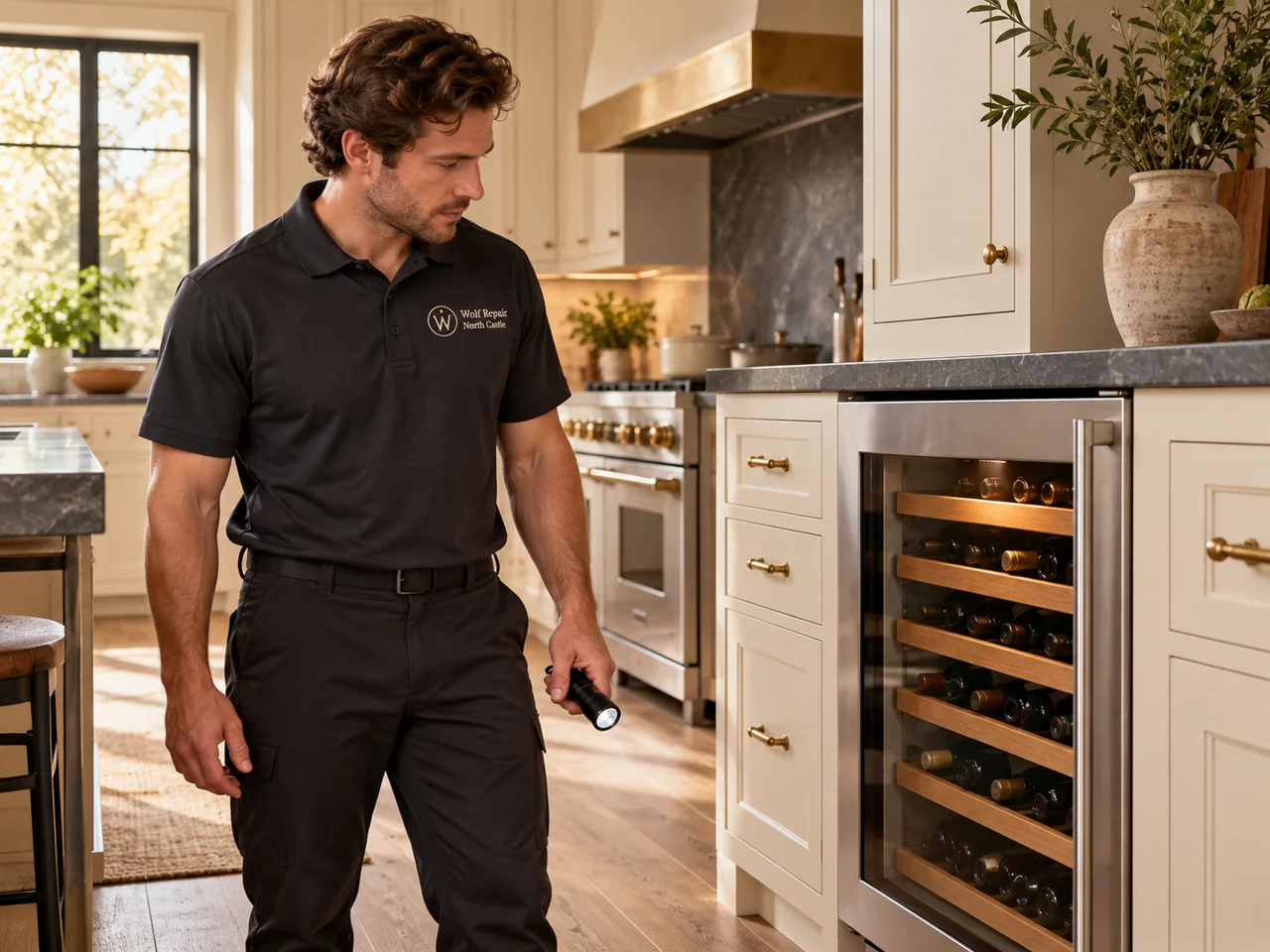
Tell the story of the fault
Uneven temperatures can involve airflow, door sealing or controls; they do not identify a failed compressor on their own.
A water leak needs its source traced. A drain issue, supply connection and door condensation require different work.
A short sequence helps: what you selected, what the appliance did, and when it stopped behaving normally. There is no need to recreate an unsafe fault.
A useful detail for this request
A problem after loading groceries differs from warmth that continues during ordinary closed-door use. Describe the timing you have already noticed rather than running a new test.
Common reasons to arrange diagnosis
- Food freezes near one shelf while another stays warm.
- A fan noise changes when the door is opened.
- Water collects below drawers or near the cabinet.
- The door no longer closes with an even seal.
- The fresh-food compartment feels warmer than its setting.
Safe preparation
Keep the doors closed as much as practical and move temperature-sensitive food to suitable cold storage if cooling is unreliable. Note the displayed setting and when the change began. Do not remove panels or disturb refrigerant lines.
A focused diagnostic visit
Testing is adapted to the appliance and reported behavior. The items below guide the inspection; they are not a promise that a particular component needs replacement.
- Temperature behavior across compartments and a complete cooling cycle
- Door alignment, gaskets and unobstructed airflow
- Fan operation, defrost behavior and accessible drainage
- Sensors, control response and electrical supply as appropriate
From request to an agreed repair
Start with the appliance and a concise description of the fault. Availability and safe access are confirmed before the visit; diagnosis then leads to a repair proposal you can approve.
The diagnostic/service call is $95 and is credited toward an approved repair. An itemized repair price is agreed after diagnosis and before work. Genuine OEM parts are used. Same-day and emergency appointments depend on schedule and location.
Parts, warranty and scope
1-Year Parts & Labor Warranty covers parts installed and labor performed under normal use. It excludes new unrelated faults, misuse, power surges and work performed by others after the service visit.
Genuine OEM parts are used. Refrigerant and sealed-system work is performed by an EPA-certified technician. This is independent service, with no claim of manufacturer endorsement.
Helpful answers
Before you arrange service
Should I keep changing the setting?
Record the existing setting and the temperature trend instead of repeatedly changing controls. Frequent adjustments can make the original behavior harder to assess.
Can you work on built-in refrigeration?
Built-in and integrated configurations are within the service scope. Safe access and the precise appliance configuration are confirmed before work is planned.
Does a warm cabinet mean the compressor has failed?
No. Airflow, door sealing, defrost operation, sensors and other faults can produce similar symptoms. The diagnosis should establish the cause before a part is proposed.